


Updated August 13, 2024
Your sales funnel–no matter how complex–needs content that meets the needs of consumers.
If it’s not fulfilling a need, publishing copy or content of any length is completely useless.
Depending on what your audience is searching for, you need both long and short form content that meet them where they are.
Every piece of content needs to serve a specific purpose.
Both short form and long form content have their place, and you need both for a successful sales funnel.
What is Short Form Content? What is Long Form Content?
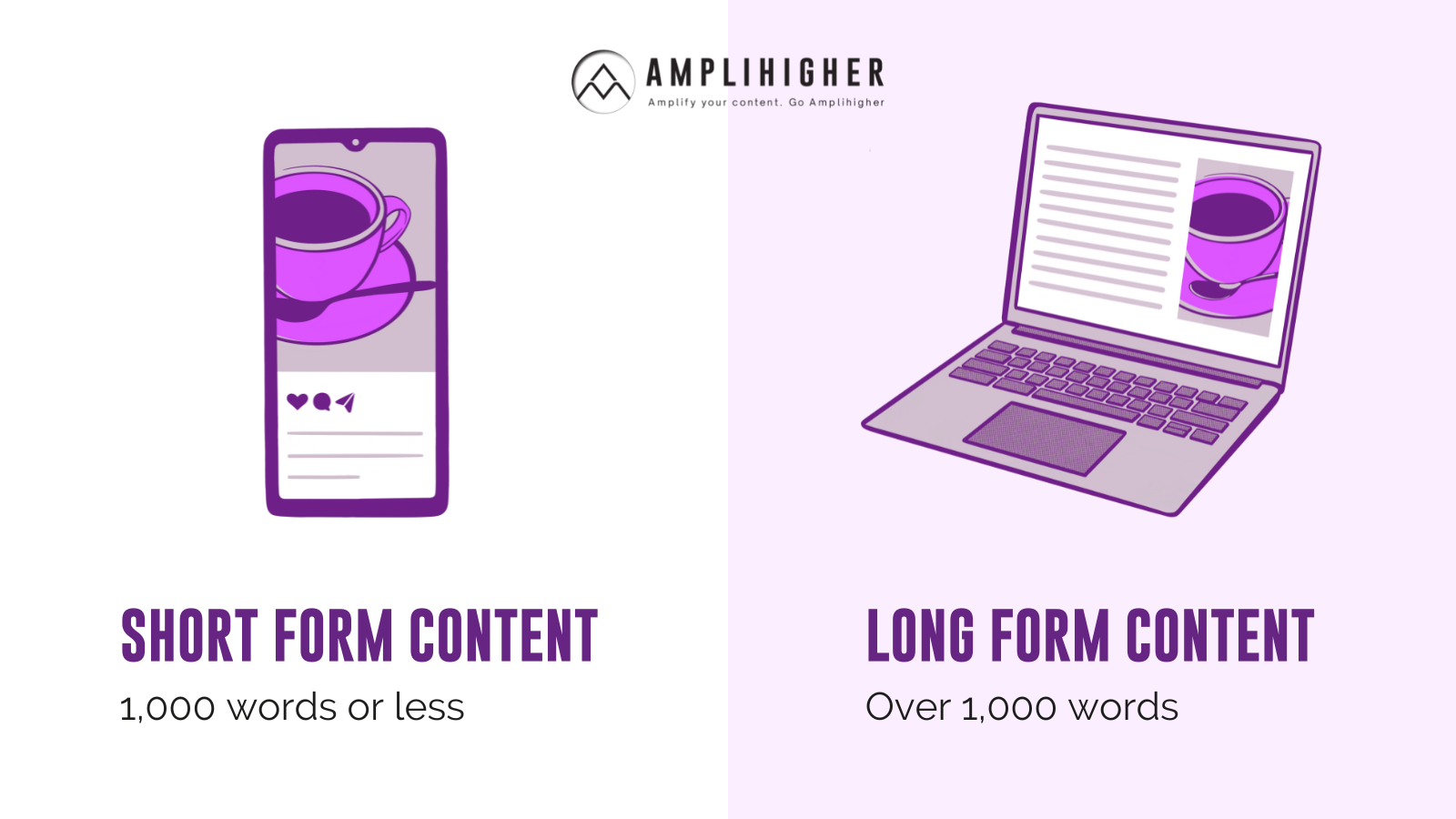
Long form content is generally any piece of content or copywriting that is 1000 words or less, while long form content is generally anything more robust.
How Long Should Your Content Be?
The length of your content depends on your objective, which should be based on user intent and what your audience already knows vs. doesn’t know.
Consider that there will be consumers at every stage of the sales funnel:
- The audience who is just beginning their search to solve a need (awareness)
- Those who are aware that there are solutions that meet their needs (interest)
- Those who are interested in taking the next step in meeting that need (desire)
- An audience who is ready to buy (action)
- Previous customers that may purchase from you again (retention)
Depending on where your audience is in the buying process, you will need to publish content that addresses their current knowledge and guides them towards the next stage in the funnel.
Let’s take a deeper look at examples of long and short form content and when to deploy them in your sales funnel.
Short Form Content Examples
Email Marketing Campaigns
Stage of the Sales Funnel: Interest, Desire, Action, Retention
Email copy isn’t supposed to be a dissertation